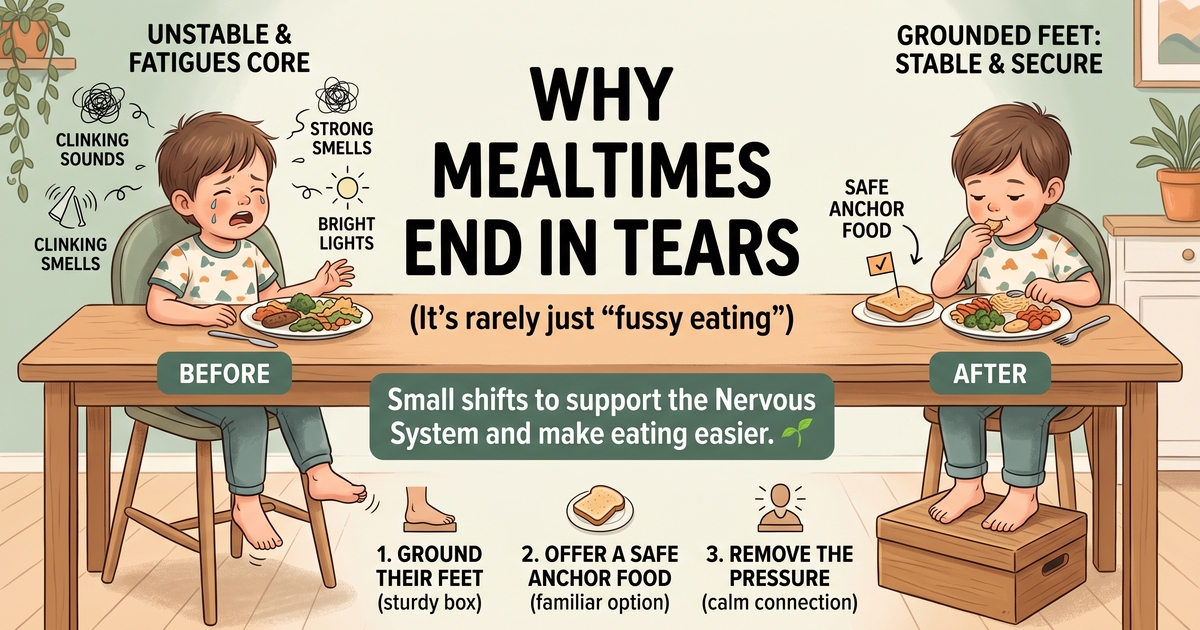
When mealtimes end in tears, frustration, or a quiet standoff over a plate, it is rarely just about "fussy eating." For many families, sitting down to dinner can quickly start to feel like a daily sensory struggle.
Before we look at what is on the plate, we need to look at the environment and the body. Sitting at the dinner table asks a tremendous amount of a child’s physical energy and nervous system.
Understanding the Mealtime Overload
Imagine trying to enjoy your dinner while sitting on a tall bar stool with your legs dangling in the air, under bright glaring lights, amidst the clinking of cutlery and strong, complex smells. It would not take long for your body to feel tired and on edge.
When a child's feet are dangling, they spend a huge amount of core energy just trying to stay upright and balanced. Combine that physical fatigue with sensory input, bright overhead lighting, loud kitchen noise, and intense smells, and a child’s nervous system can quickly slip into high alert.
When a body feels unsafe or overwhelmed, appetite naturally shuts down.
Three Simple Shifts for Calmer Mealtimes
Before expecting a child to explore food, their body needs to feel safe, grounded, and secure. Here are three simple tweaks that can completely transform mealtime overload:
Ground their feet. Physical stability is the foundation of emotional calm. If your child’s feet are dangling, place a footrest, a sturdy box, or a step underneath them. When their feet are firmly supported, they no longer waste core strength trying to balance, leaving more energy for eating.
Offer a zero-stress option. Plates full of unfamiliar choices can trigger instant anxiety. Always include at least one zero-stress option on their plate alongside anything new—a familiar, trusted food you know they eat comfortably without any negotiation.
Remove the pressure. Shift the focus away from counting bites, bargaining, or managing food intake. When we pressure children to eat, stress spikes. Instead, move towards calm, easy connection, talking, sharing stories, and simply enjoying being together.
The Kind Approach Reminder: Mealtimes are not a test of willpower or a battle to be won. When we support a child’s physical body and ease the sensory demand, eating becomes so much easier. Small environmental changes really do make a world of difference.