During my time as a primary school teacher, I worked with a brilliant neurodivergent child who would only drink one thing: highly sweetened juice. Naturally, the adults around them were worried. They were concerned about sugar intake and dental health, and constantly tried to encourage plain water. The result? A tense standoff, a dysregulated child, and absolutely no water consumed.
We are constantly told to "just drink eight glasses of water a day." But for many neurodivergent children and adults, plain water isn't just boring, it can feel physically impossible to drink.
This isn't stubbornness, and it isn't just "fussy" behaviour. Most of the time, it comes down to two simple hurdles:
-
Missing the thirst cue: The brain often forgets to tell the body it needs water until a headache or an afternoon energy crash has already arrived.
-
Water feels unpleasant: To a sensitive mouth, plain room-temperature water can taste metallic, feel strangely "heavy", or even trigger a gag reflex.
That child in my class wasn't trying to be difficult. The strong flavour of sweet juice gave their mouth something to actually notice, making it much easier to drink.
While sugary drinks aren't the long-term goal, being dehydrated makes staying calm and settled so much harder. Our first step is simply helping them drink comfortably. Once the battle and pressure are removed, we can gently guide them towards better options, one small step at a time.
Here are a few neuro-affirming ways to make hydration easier:
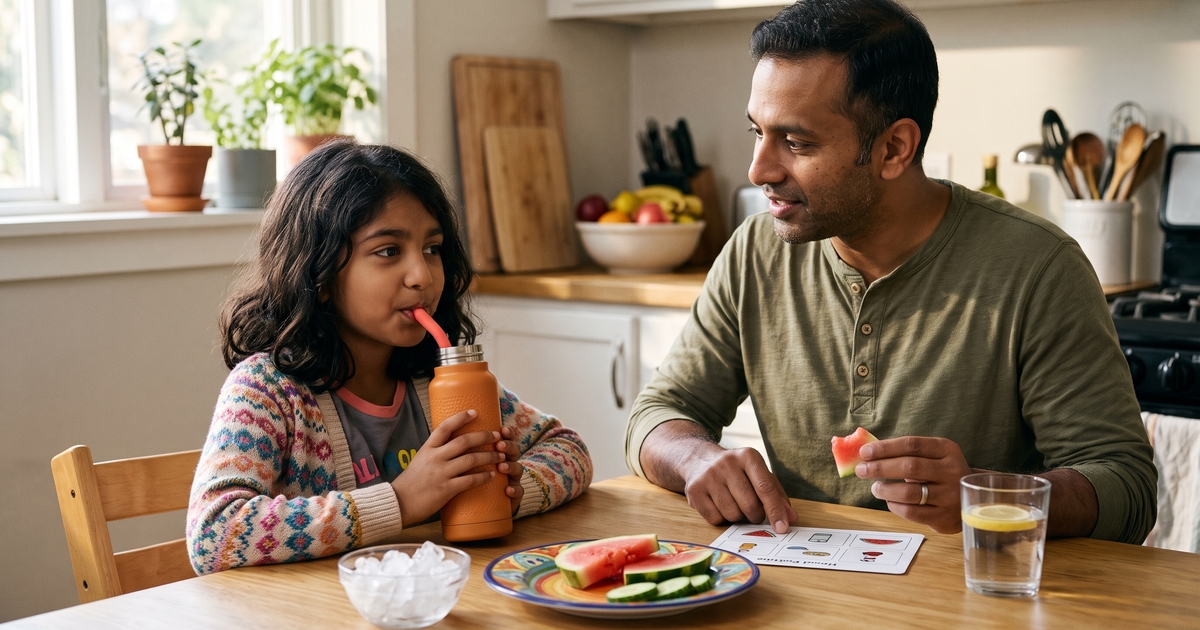
- Change the delivery method: Sometimes the issue isn't the water itself, but how it is consumed. Heavy-resistance silicone straws or bite-valve bottles provide regulating proprioceptive input to the jaw (like chewing), which can be deeply calming for the nervous system.
- Play with temperature and texture: Plain, room-temperature water offers zero sensory feedback. Try crushed ice, keeping water freezing cold in an insulated metal flask, or using lightly sparkling water to physically "wake up" the mouth.
- Hydrate through food: If drinking liquids is a daily battle, eat your water instead. High-water-content foods like cucumber, watermelon, strawberries, ice lollies, and warm broths are brilliant, low-demand ways to stay hydrated.
- The step-down approach for juice: If your child currently only drinks squash or juice, do not take it away cold turkey. Dilute their favourite drink by just 10% with water. Hold it at that ratio for a week or two until their sensory system adjusts, then dilute it slightly more.
- Visual cues and habit stacking: For those who simply forget to drink due to interoception blind spots, "feeling thirsty" is not a reliable cue. Place brightly coloured water bottles exactly where the eyes naturally land, or tie taking a sip to an existing daily habit (like putting on your shoes, or opening the laptop).
The Kind Approach Reminder: Hydration does not have to look like a clear glass of plain water. Any fluid intake is a win for a sensitive nervous system. If mealtimes, drinking, or everyday routines are causing daily battles in your home, you do not need stricter rules, you need a plan built for your child's unique nervous system.