When we feel overwhelmed by daily burnout, brain fog, or sensory fatigue, it is easy to assume we just need to try harder or push through. But as we often explore here at Kind Approach, true wellbeing begins with listening to what our bodies and brains fundamentally need to thrive.
Sometimes, the secret to feeling more grounded, focused, and resilient lies in the microscopic building blocks of our diet. One of the most powerful, yet frequently overlooked, nutrients is zinc.
Despite being a "trace mineral" (meaning our bodies only need it in small amounts), zinc acts as a quiet powerhouse behind the scenes. It is involved in over 300 enzymatic reactions in the body and plays a foundational role in everything from mental clarity to emotional regulation.
Here is a look at why zinc is so essential, especially if you are navigating a high mental load or a neurodivergent brain, and how you can gently incorporate more of it into your routine.
1. Supporting Brain Function and Focus. Our brains are exceptionally hungry organs, and zinc is critical for optimal cognitive function. It plays a vital role in neurotransmission—the chemical signalling between brain cells. For neurodivergent individuals, or anyone managing ADHD-style brain fog and executive dysfunction, zinc is particularly interesting. It assists in the regulation and synthesis of key neurotransmitters like dopamine and serotonin, which govern motivation, focus, and mood regulation. Having healthy zinc levels can help steady the mind and support everyday concentration.
2. Calming the Nervous System and Aiding Sleep. If you struggle with a racing mind at bedtime or frequent overstimulation, zinc might be the gentle ally you need. It regulates the body's stress response and supports the production of melatonin (our primary sleep hormone). By helping to calm an over-activated nervous system, adequate zinc intake encourages deeper, more restorative sleep—giving your brain the crucial recovery time it needs.
3. Strengthening the Immune System. When we are burnt out or chronically stressed, our physical defences often take a hit. Zinc is famous for its role in supporting the immune system. It helps develop and activate white blood cells, allowing your body to ward off everyday infections and bounce back more quickly when you do catch a cold.
4. Gut Health and the Gut-Brain Connection. At Kind Approach, we know that mental wellbeing is deeply connected to gut health. Zinc is essential for maintaining the integrity of the gut lining and supporting smooth digestion. A healthy gut ensures you are effectively absorbing the vitamins and minerals you consume, creating a positive feedback loop for your energy and mood.
Subtle Signs You Might Be Running Low on Zinc
Because our bodies cannot store zinc for long periods, we need a steady, daily supply through our diet. When your zinc levels dip, your body might send you a few gentle signals, such as:
- Lingering brain fog, difficulty focusing, or low mood
- Feeling more susceptible to colds and infections
- Sluggish wound healing (e.g., cuts or blemishes taking longer to clear up)
- Brittle nails, hair thinning, or dry skin
- A subtle change or dulling in your sense of taste or smell
How to Boost Your Zinc Intake the "Kind Approach" Way
You do not need an extreme diet overhaul to improve your zinc levels. Instead, focus on small, sustainable additions to your daily meals.
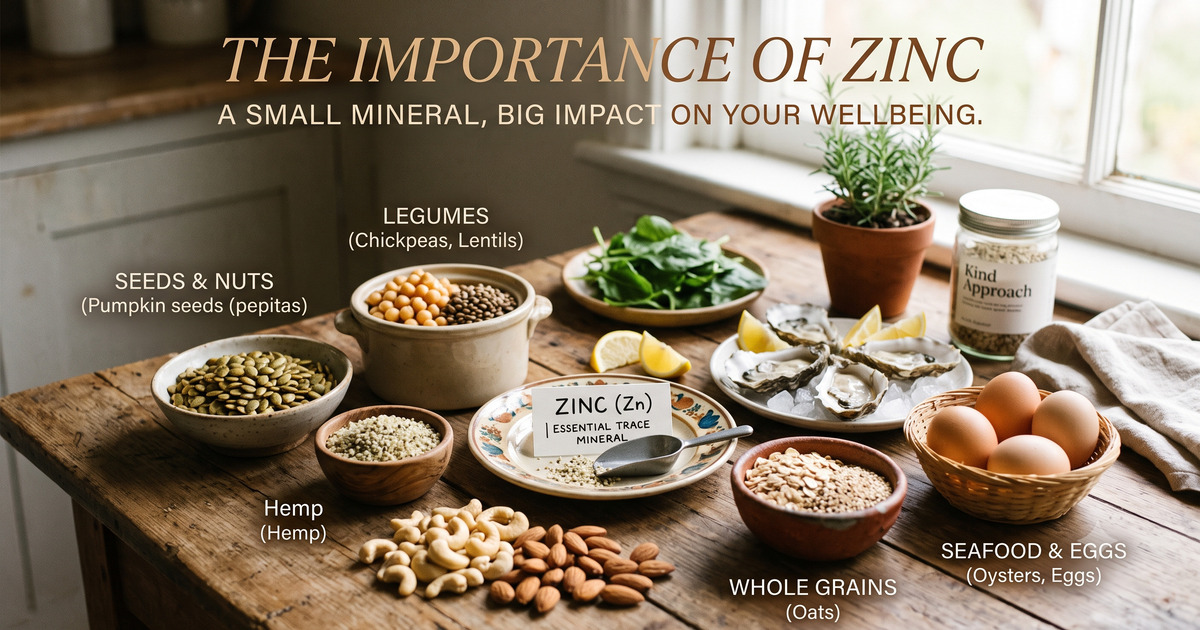
Here are some of the best whole-food sources of zinc:
- Seeds and Nuts: Pumpkin seeds (pepitas) and hemp seeds are fantastic, nutrient-dense sources. A handful sprinkled over porridge, salads, or yoghurt is an easy daily habit. Cashews and almonds are also great options.
- Legumes: Chickpeas, lentils, and black beans provide a solid plant-based dose of zinc alongside slow-release fibre. (Tip: Soaking or rinsing canned legumes helps your body absorb the zinc much more easily!)
- Whole Grains: Oats, quinoa, and brown rice contain modest amounts of zinc and provide the steady glucose your brain needs for sustained energy.
- Animal Sources: If you eat animal products, shellfish (especially oysters), organic eggs, grass-fed beef, and poultry are among the most readily absorbed sources of zinc.
The Kind Approach Reminder: Nourishing your body with essential minerals like zinc is a profound act of self-kindness. By giving your brain and nervous system the raw materials they need to function at their best, you build a stronger, more resilient foundation for daily life