When mornings end in tears, frantic searches for missing shoes, or a standoff over a scratchy sock seam, it is rarely just about "refusing to listen." For many families, getting out the door can quickly start to feel like a daily battleground.
Before we look at the clock or the schedule, we need to look at the environment and the body. Stepping into the morning asks a tremendous amount of a child’s physical energy and nervous system.
Why Mornings Feel Like a "Perfect Storm"
Imagine waking up from a deep sleep and immediately being asked to sprint through a bright, loud room while managing itching clothes, low energy, and instructions being thrown at you from every direction. It would not take long for your heart to race and your body to feel on edge.
To support our children, we first need to understand what is happening inside their bodies and brains when the alarm goes off:
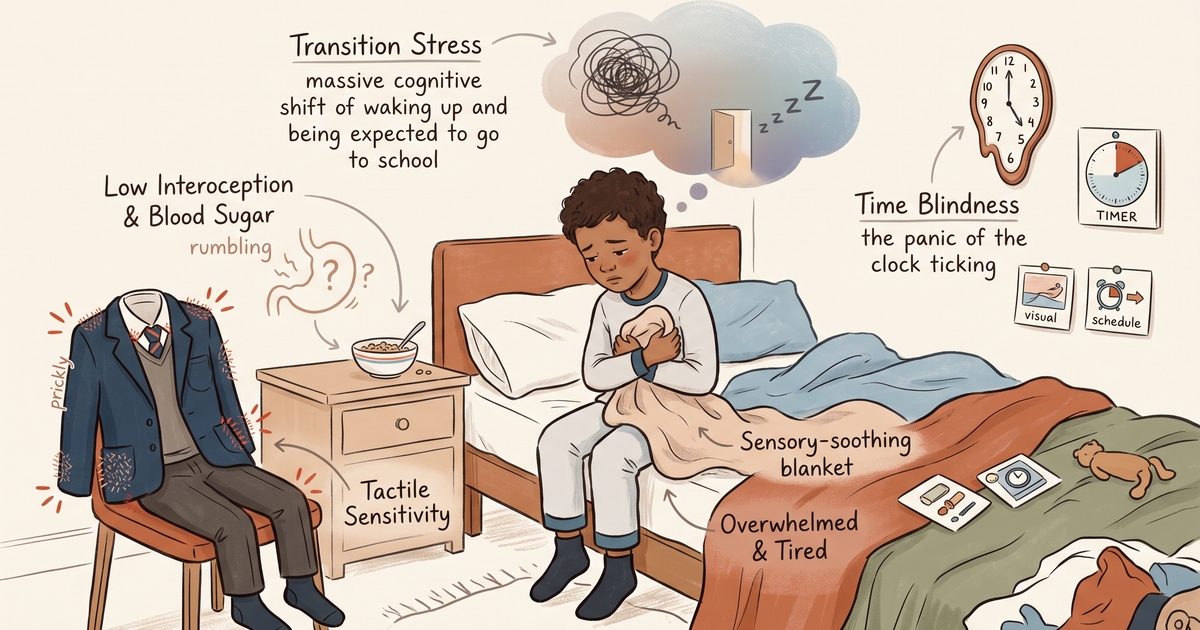
Transition Stress: Moving from the quiet safety of sleep into the loud, high-demand environment of school requires a massive cognitive shift. For a neurodivergent brain, rapid transitions are deeply unsettling.
Low Interoception & Blood Sugar: Children often wake up hungry, thirsty, or needing the toilet without actually realizing it. This lack of internal body awareness (interoception) often shows up as irritability or refusal to get out of bed.
Tactile Sensitivity: School uniforms are often a sensory nightmare. Stiff collars, tight waistbands, and uncomfortable sock seams can cause genuine physical distress to a sensitive nervous system.
Time Blindness: Saying "we need to leave in ten minutes" means very little to a brain that struggles with the abstract concept of time. This often leads to sudden panic when time runs out.
When a body feels unsafe or overwhelmed, co-operation naturally shuts down.
Three Simple Shifts for Calmer Mornings
Before expecting a child to follow a routine, their body needs to feel safe, grounded, and secure. Here are three simple tweaks that can completely transform morning overload:
Wake the body first. Sudden alarms spike stress hormones. Use gradual light, gentle music, or deep pressure like a firm hug or a weighted blanket to ground their nervous system before asking the brain to start thinking.
Remove the micro-decisions. Decision fatigue breeds panic. Lay out sensory-tested clothes the night before, and use simple visual checklists so your voice doesn't become the primary source of instruction and friction.
Connect before you correct. Children absorb our nervous system state. Spend the first 60 seconds of the morning offering a cuddle, a warm smile, or a quiet moment together before initiating the task list.
The Kind Approach Reminder: Mornings are not a test of efficiency or a battle to be won. When we support a child’s physical body and ease the sensory demand, stepping into the day becomes so much easier. Small environmental changes really do make a world of difference.